
Mass Deportations. What If They Were White?
The situation
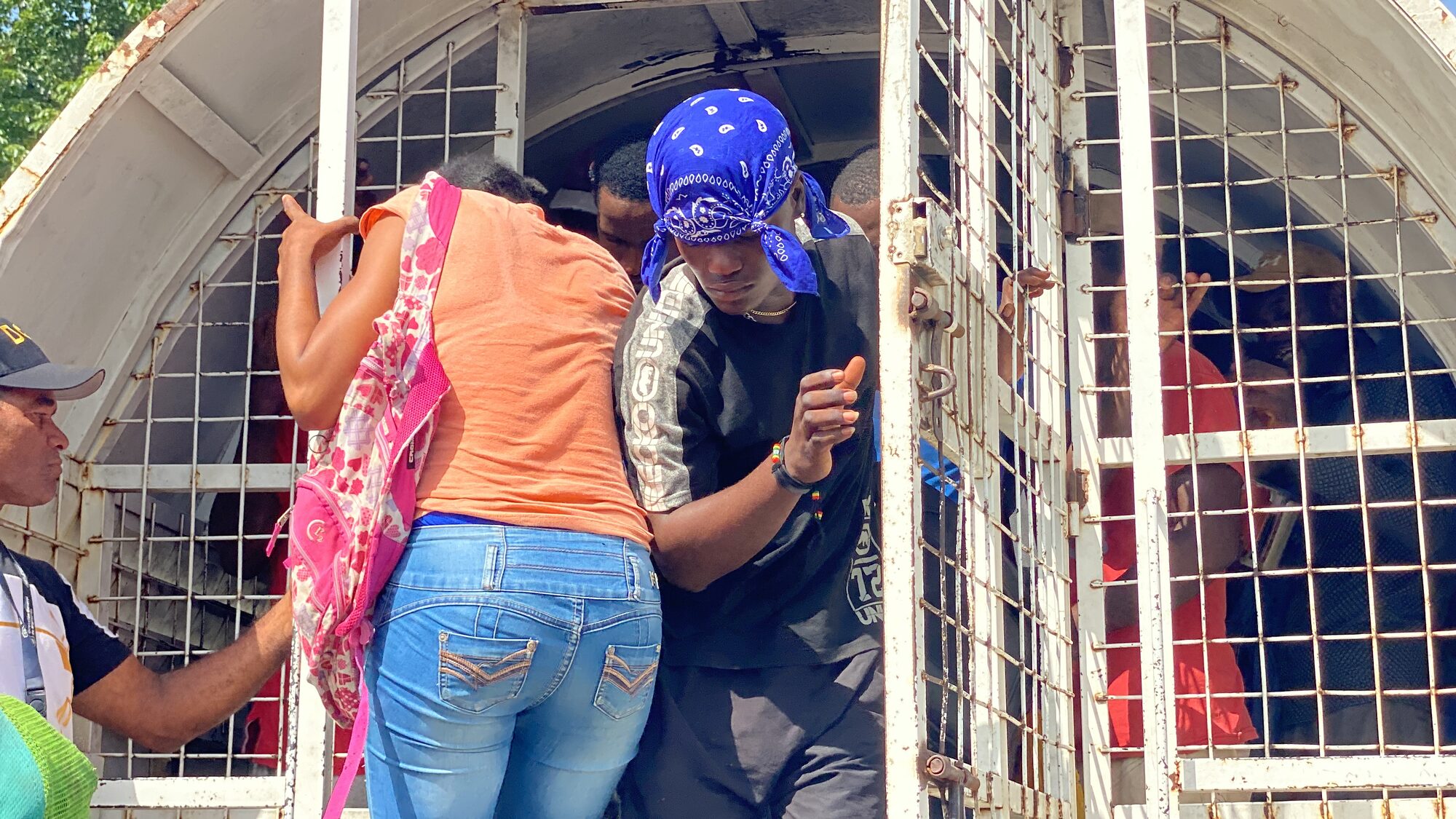
Since 2022, the Dominican government has escalated mass deportations of Haitians and Dominicans of Haitian descent. It is estimated that more than 10,000 people per week are deported without due process or respect for their fundamental rights. Men, pregnant women and children are arbitrarily detained, often without being allowed to present documentation, then transported in inhumane conditions, crammed into trucks belonging to the Dirección General de Migración (DGM) that have a capacity of 52 people yet often carry more than 110 per trip.
Corruption is rampant on both sides of the border, involving the Haitian police force POLIFRONT and the Dominican CESFRONT, and deportations have become a lucrative business benefiting officials and intermediaries from both institutions. Immigration raids occur across the country, frequently without court orders. Authorities often break into bateyes — informal settlements where Haitian-origin communities live — at night and detain people while they sleep, creating a constant state of fear.
Today thousands live in what could be described as open-air prisons, afraid to leave the bateyes even to work or seek medical care. Alarmingly, many of those deported are not recent migrants but Dominican-born second- and third-generation descendants of Haitian migrants: the 2013 Constitutional Court ruling (Sentencia 168-13) retroactively stripped tens of thousands of people of their nationality, creating a stateless crisis that remains unresolved. Rendered "illegal" in the only country they have ever known, they have no access to education, healthcare, employment or legal protection.
What we are doing
We are collaborating with the Colectivo de Derechos Humanos y Migración de República Dominicana to stop mass deportations and expose human rights violations; to counter hate speech through a targeted social media communication strategy and educational initiatives promoting truthful, empathetic narratives; to raise awareness through storytelling, producing the documentary What If They Were White? as the centrepiece of a broader advocacy campaign for justice and immigration reform; to advocate for immigration law reform that complies with international human rights standards; and to provide legal assistance and documentation support to Haitian and Dominican-Haitian leaders living in the Dominican Republic.
How can you help? Share our campaign on social media and in your networks. Partner with us to expand legal, humanitarian and educational support for displaced and stateless people. Sponsor documentation: support a person's legal papers and access to basic rights for $250. Organise or attend educational events, screenings and community discussions at schools, cultural centres or universities. Donate or fundraise for our ongoing advocacy campaigns, humanitarian aid and media projects.
Stand with those torn from their homes, so that justice can cross every border.