
Where we work
Western Sahara
Background
For more than 50 years, over 173,000 Sahrawi people have lived as refugees in Algeria's Tindouf desert — known as the "desert of deserts". They were forcibly displaced from their homeland of Western Sahara, the last colony in Africa and one of 17 Non-Self-Governing Territories recognised by the United Nations.
Their exile is reinforced by one of the world's longest military walls: a complex of six fortified lines stretching 2,770 kilometres, built by Morocco and fortified with more than 9 million anti-personnel landmines — designed to divide families, isolate refugees and perpetuate the occupation. It is the second longest wall in the world after the Great Wall of China, and one of the most dangerous areas on Earth.
In its landmark Advisory Opinion of 16 October 1975, the International Court of Justice concluded that Morocco had no sovereignty over Western Sahara — yet in practice, the occupation continues. The conflict, ongoing since 1975 between Morocco and the POLISARIO Front (the legitimate representative of the Sahrawi Arab Democratic Republic, SADR), has caused immense suffering. After a 1991 ceasefire, hostilities resumed in 2020, and following clashes near Guerguerat, armed conflict was reestablished in November 2021.
Exiled from their sea and stripped of their natural resources, the Sahrawi people have shown extraordinary resilience. Known as the magicians of the desert, they have raised a society in waiting — waiting for a long-promised referendum on self-determination that has yet to come.
Our work in Western Sahara
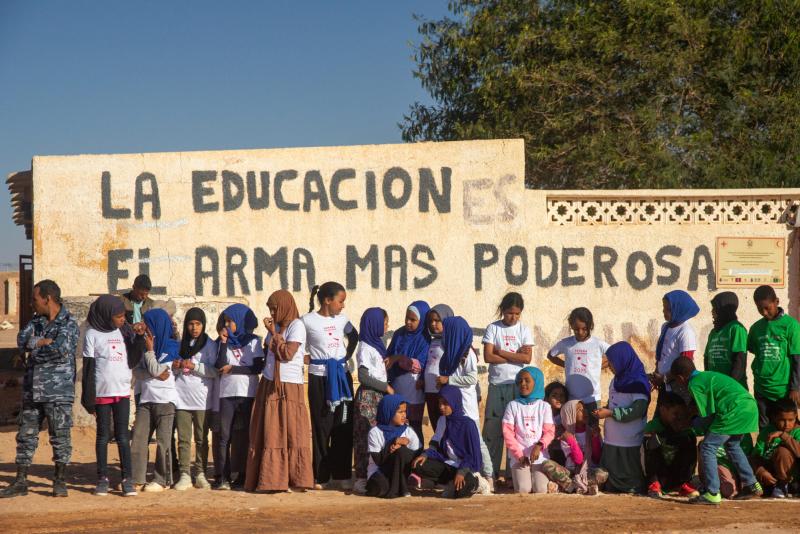
Bridges of the Desert
Where others plant mines and pain, we raise libraries and gardens of hope. A network of libraries in the Sahrawi refugee camps, Algeria.
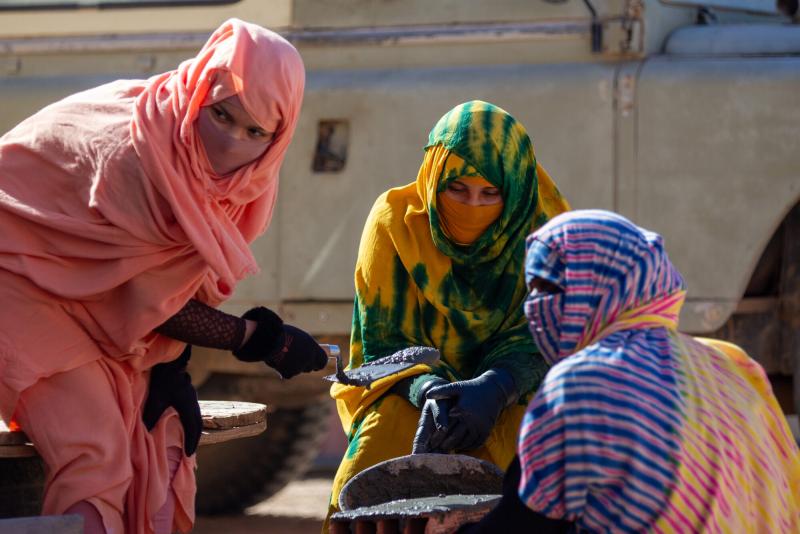
Mission Trip 2026. Filling the Gaps: Support for Landmine Victims
A humanitarian health mission for Sahrawi landmine survivors, delivered with Sahrawi mine-action organisations and the SADR Ministry of Health.