
Bridges of the Desert
The situation
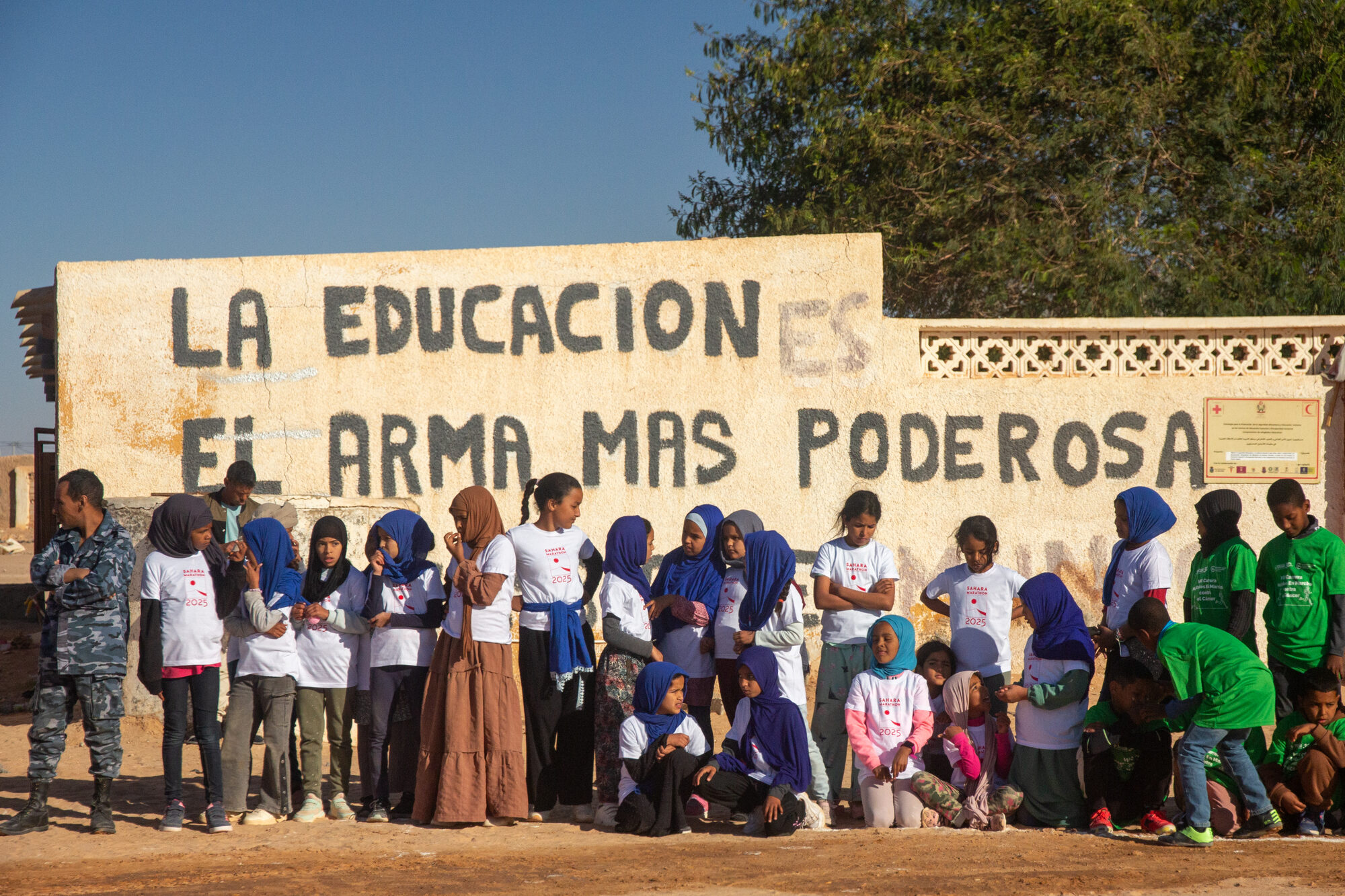
Although each Wilaya (district) has schools, conditions are precarious. Most teachers are parents volunteering their time and energy for their children's future, yet schools lack infrastructure, resources and training opportunities. Many operate without libraries, books, colours or instruments. Each Wilaya has been named after territories of Western Sahara — Smara, Ausserd, El Aaiún, Dakhla and Boujdour — so as to preserve memory and belonging despite exile.
When we returned to the camps in February 2025, we visited several schools, including Abda Mohamed in Smara, where 700 students share only 15 books. A volleyball court stands with nothing but two posts and a torn net. Teachers pleaded for books — windows to the world — along with printers, notebooks, and above all, ongoing support and training.
This stark reality contrasts with the remarkable strength, hospitality and unwavering commitment of the Sahrawi people, who see education not only as a right but as a foundation of dignity, identity and freedom. Unlike the stigmas often associated with the word "refugee", the Sahrawis are a highly educated community. Many speak four languages: Hassanía Arabic, Spanish (as Western Sahara was once Spain's 54th province), French (as the camps are in Algeria), and English.
What we are doing
At WTTW, in partnership with Sahrawi educators and local organisations, we launched the "Bridges of the Desert" project. We are currently working in three educational centres to establish libraries, art and music rooms, play areas, and small community gardens with desert-adapted plants such as moringa, aloe vera and cactus. To sustain these efforts, we send approximately one tonne of school materials every two months.
The project is led on the ground by Amma Sahla, an 18-year-old Sahrawi, official WTTW member and project coordinator. Her leadership ensures cultural authenticity and community trust while creating meaningful employment opportunities. Every February we conduct teacher training sessions. Beneficiaries: Martyr Abda Mohamed School (Wilaya of Smara), 700 students; 8th of March School (Wilaya of El Aaiún), 480 students; Ausserd Kindergarten (Wilaya of Ausserd), 220 students.
How you can help: Donate to cover shipping costs and ensure the project's sustainability (about €2 per kilo). Sponsor a child for just $7 per month. Organise drives to collect books, toys, school supplies, musical instruments, backpacks or seeds. Connect your school or cultural centre with an educational centre in the camps. In the shadow of the longest wall of occupation, we choose to raise libraries, gardens and bridges of dignity in the desert.